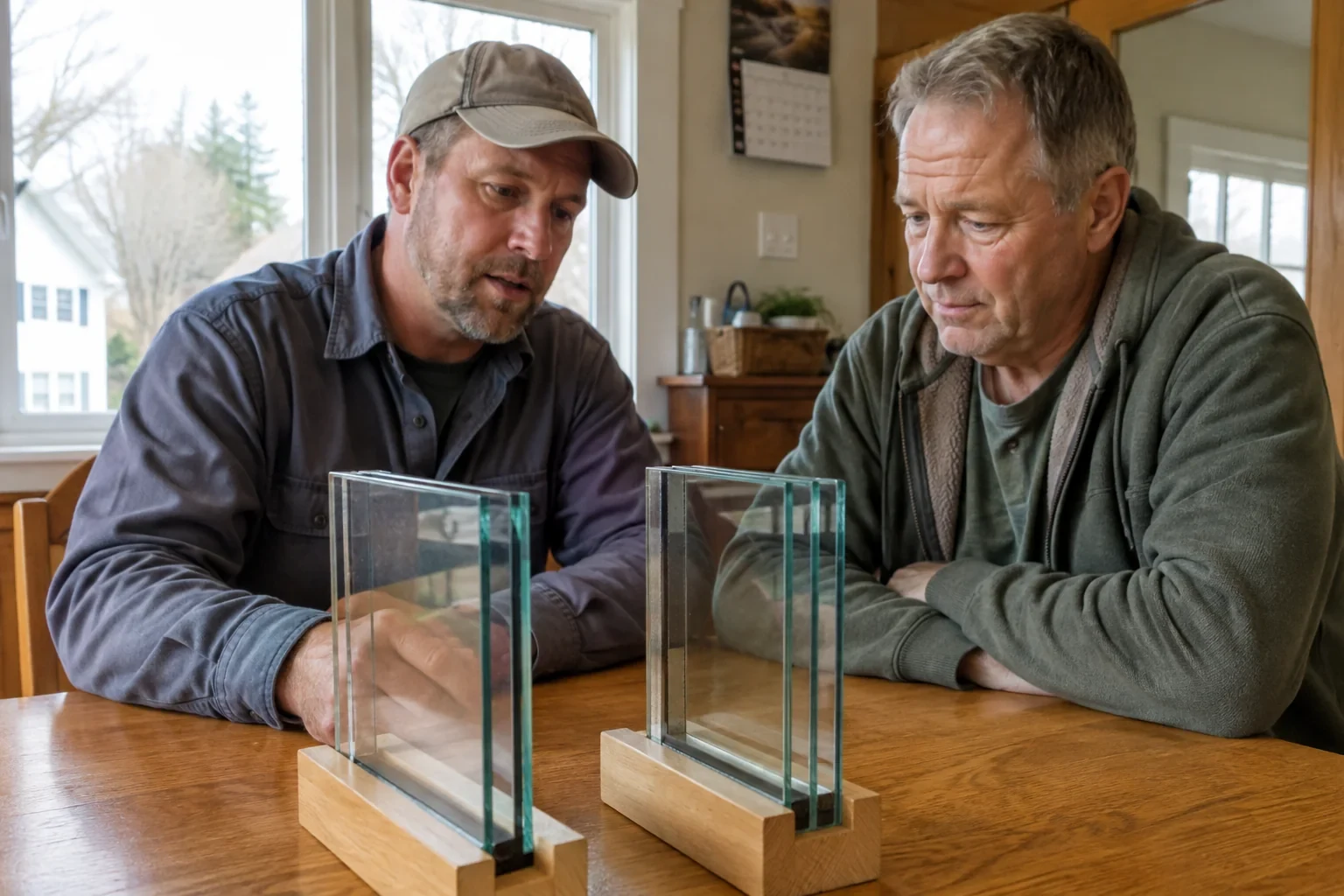
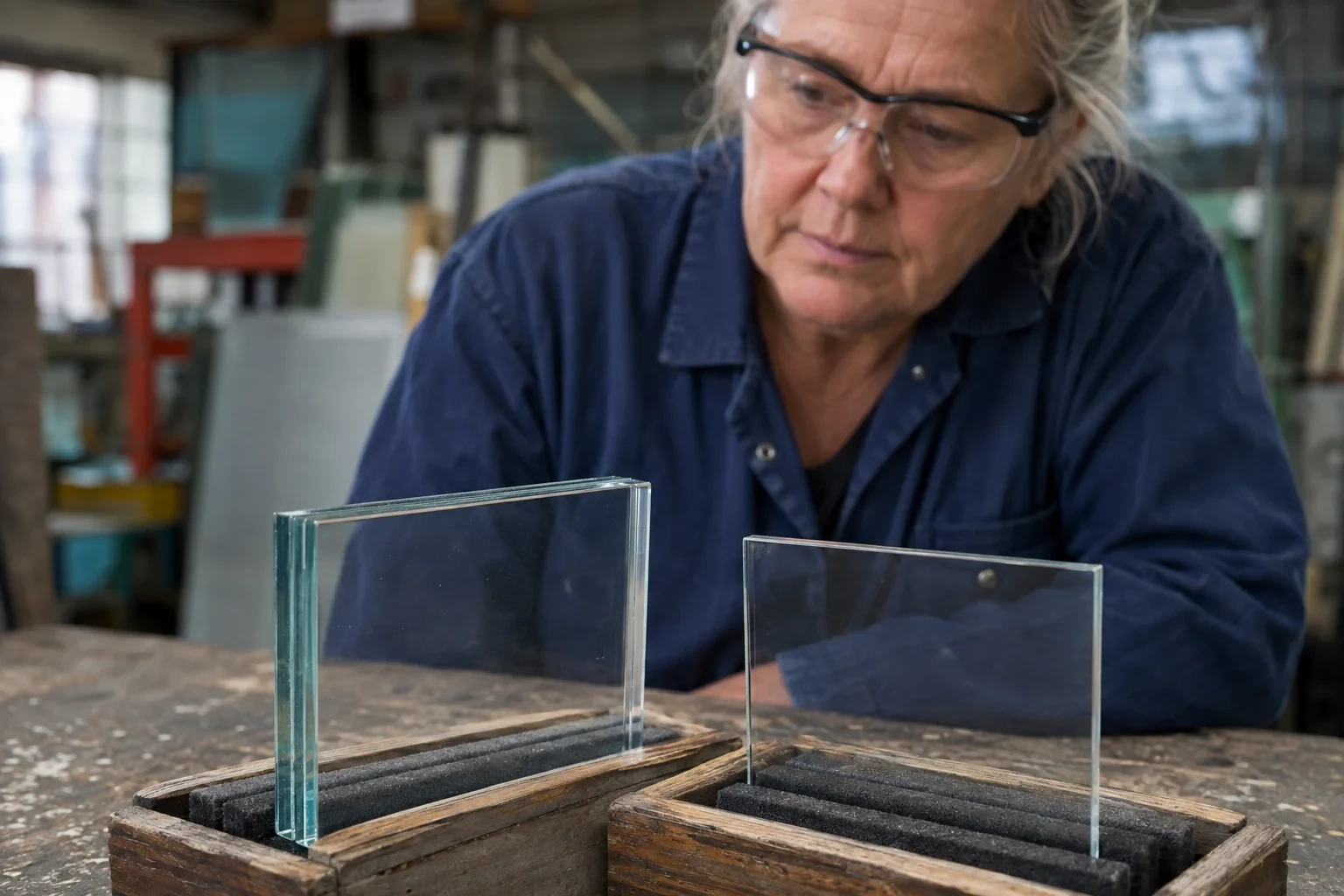
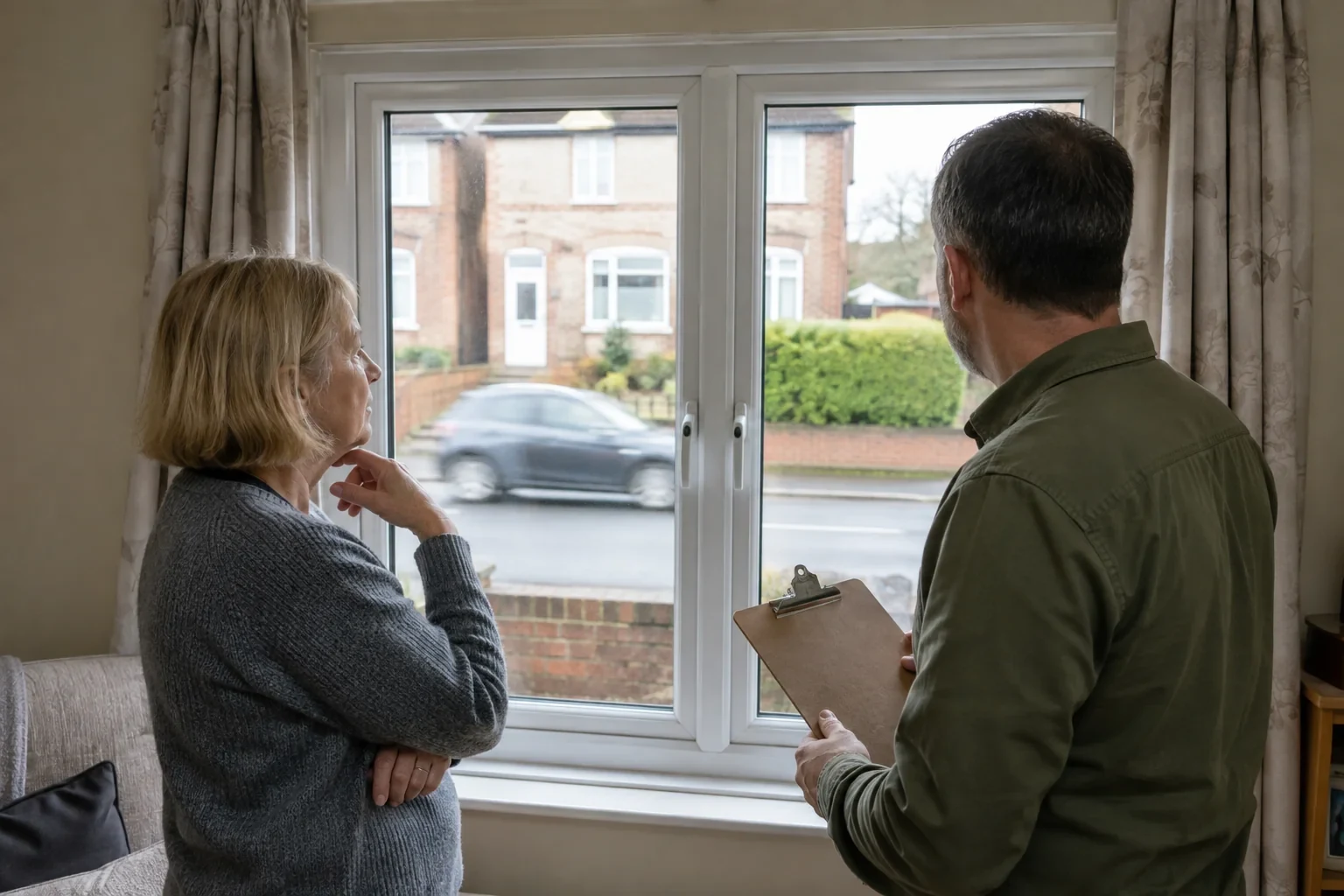
 Service illustration · not a completed customer project
THE WORK, EXPLAINED
Start with the condition.
Understand the scope.
Describe the sound, when it occurs and which openings are affected. Ask how the provider will assess the sound paths and explain the proposed glazing or window change, including its limits and compatibility with retained components. Request product evidence for any claimed acoustic performance and keep perimeter or surrounding-construction work explicit in the quote.
What may be involved
- acoustic laminated glass
- dissimilar-thickness glass panes
- insulated glass spacer
- compression gaskets
- backer rod
- acoustic perimeter sealant
- compatible window frame
Ask the provider to distinguish existing parts to inspect, proposed replacements, and tools, materials or reports included in the service. Confirm the work and exclusions after assessment; this list does not mean that every item will be supplied or replaced.
LOCAL RESEARCH / Outer Richmond
Housing context
Planning identifies this area among neighborhoods containing RH-1 one-family residential zoning, so individual-home hardware is part of the local mix.
Source ↗Local context
California licenses contractors by classification, and the Contractors State License Board publishes the current list. Glazing work sits under C-17 Glazing Contractor, so it is reasonable to ask which classification a licence carries and to check the licence number with the board before glass or window work is arranged. The classification list describes the trades the state recognises; it is not a record of any particular company's licence, standing or suitability for your project.
Source ↗Area-wide context does not establish the condition of your property or equipment.
Before the visit
Identify the affected opening and describe the symptom. Gather available product labels and previous work records. Explain access restrictions and keep the opening clear.